

Does It Matter How You Trained?

Approx. reading time 55 minutes
A comparison of formal actor training and self-directed learning — their advantages, their risks, their failures, and what they are both ultimately trying to produce.

I am a great fan of training through a formal institute but, I also know that it is the years after my training that made me the artist I am today.
The question of whether to train formally or to develop independently has been present in the acting profession for as long as there have been drama schools to attend. Both pathways have produced remarkable artists and both have produced mediocre ones also. The honest answer is that neither is inherently superior to the other and anyone who tells you otherwise is probably trying to sell you something.
This article is a reflection of my forty years of experience on both sides of this question — as a formally trained actor, a self-directed director of theatre, and as someone who has taught and worked alongside actors from every conceivable training background. I'm not passing sentence on either path, this is not a verdict, it's mearly my comparison.
Laurence Olivier famously dismissed this whole question with something to the effect of 'Learn your lines and don't bump into the furniture'. It's a great line. But I think he said it more for effect than being a truth. Olivier was a ferociously trained and technically precise performer — his little quip tells you more about his resistance to being analysed than it does about how he actually worked. He was also a ferociously witty man.
What Each Path Offers — and What Each Risks
Formal training cannot 'teach' talent — it can only refine and develop what already exists in the actor. And self-directed learning, however authentic, cannot replace the discipline of full time training that turns instinct into craft. Both are required and no amount of fees, no quality of experience, and no amount of natural ability will compensate for the absence of the other.
Stella Adler was very clear about what training is actually for: creating an actor who takes full responsibility for their own artistic development — not someone who waits to be unlocked by a director or teacher, but someone who carries their craft and their growth as an artist. This was at the core of the training I received, thank goodness. Adler was equally clear about what happens when technique is truly absorbed: you begin to act when you can forget your training entirely, because it has become so securely part of you that you no longer need to think about it. That's the destination that every artist strives for. It's a road well travelled. What she didn't say is that the road looks very different depending on which lane you're in, and both can be bumpy.
One of the greatest dangers in formal training is when the methodology comes from a single source. A student trained exclusively in one tradition learns to solve every problem the same way. The approach becomes merely a reflex. And a reflex, however well developed it is, is not the same thing as genuine creative choice. WAAPA was fantastic in drawing on a vast range of traditions — no single 'way' to act, but a contradictory collection of approaches that demanded we do our own thinking.
One of the significant influences on our training at WAAPA was the work of Robert Benedetti, whose book The Actor at Work was one of our major source materials. Benedetti doesn't promote a single method of acting, and the training focuses on the concept of Action, which blends classic acting principles with modern psychology and physical discipline. Self discovery is big in Benedetti's world and that disposition toward self-discovery, built into the fabric of the training, is something I have carried throughout my career. The self-directed actor who assembles their own varied range of influences is doing something similar.
The self-directed actor arrives at that destination without a map. They are forced to identify their own gaps and take responsibility for filling them from the very beginning. This is harder. It is also, when done with genuine seriousness, one of the most valuable habits a practitioner can develop — because the self-knowledge it requires sustains a career long after any training environment has been left behind. The conservatory student who graduates without developing this habit is, professionally speaking, already behind.
Meryl Streep — possibly the most celebrated product of formal actor training in the history of American cinema — has said that at Yale the least valuable classes may have been in acting, and that she largely made it up as she went along, finding the most value in movement, singing, and verse-speaking. The craft she is most celebrated for was partly assembled by her own initiative. Formal training gave her the environment and the time. What she built inside it was, in significant part, her own. If that doesn't complicate the argument for both paths simultaneously, nothing will.
Philip Seymour Hoffman trained at NYU's Tisch School of the Arts — an eclectic program rooted in Stanislavski but deliberately not confined to a single methodology — and built one of the most extraordinary careers in the history of American screen and stage performance. He described acting well as being like lugging weights upstairs with your head — requiring concentration, will, emotional life, and imagination all working together simultaneously — and said he didn't think it should get any easier. His willingness to risk everything on every role, his refusal to coast on a familiar instrument, and his sustained commitment to both stage and screen across his entire career make him the formal training argument at its most complete. Not technique as a shield. Technique as a foundation for genuine risk.
Formal training also provides something the self-directed actor has to work harder to find: community. The conservatory cohort — the shared years, the common language, the network of peers who know your work and carry it into the profession with them — is one of the most practically valuable things formal training produces, and one of the least discussed. But I want to be clear about what kind of community I mean. Not the kind that sits around a coffee table talking about getting the job — who is auditioning for what, who has an agent, whose career is moving and whose isn't. That conversation is ultimately boring, and in my experience it is driven almost entirely by ego. Give me. Give me. Give me. The community I'm talking about is something altogether different — a group of people who have been through fire together, who share a genuine language of craft, who challenge each other's work honestly and carry each other's reputation into rooms they enter first. They celebrate each other's achievements. That is the community worth having. And it is the community the self-directed actor has to build more deliberately — through professional experience rather than institutional proximity. It takes longer. Those relationships, when they form, tend to be more durable — built on shared work rather than shared timetables.
Formal training gives you structure, community, and discipline. It can also give you a standardised voice, a narrow aesthetic, and the comfortable assumption that because you graduated, the growing is done. Self-directed learning gives you freedom, authenticity, and genuine ownership of your own craft. It can also give you drift, insularity, and habits that have never been seriously challenged. Neither path is safe.
Neither is sufficient on its own. What decides the outcome is not which path you chose. It is how honestly you walked it.

The Actor's Relationship with Text
Where the comparison between the two paths becomes most visible for me is in the handling of complex text. Shakespeare, Chekhov, Ibsen, Beckett, Barker — these writers make specific and demanding requirements on voice, breath, rhythm, and structural understanding that are genuinely difficult to develop without proper guidance. It is a question of tools — and formal training tends to provide those tools more systematically than self-directed learning. That is not a judgment. It is simply an observation about what a structured curriculum does consistently well.
The most persistent problem I witness — and one I find myself returning to in almost every workshop I run — is the absence of homework. I have a favourite phrase that I use so often my students could probably recite it back to me: the rehearsal room is the playground for the actor's homework. Many actors leave the intellectual investigation of the text entirely to the rehearsal room — arriving with the words learned but the work un-started, waiting for the rehearsal process to do what they should have done alone at the kitchen table the night before. The formally trained actor is more likely to have been taught a framework for approaching that preparation before rehearsal begins. The self-directed actor may arrive with genuine instinct and authenticity but without the analytical tools that allow that instinct to be directed productively. Both arrive in the same room. Only one of them has done the work to deserve being there.
Which brings me to something that drives me absolutely insane — the actor who stops a rehearsal to ask what "thou" means. Or "thine." Or any number of words sitting right there on any device in their pocket. There is simply no excuse anymore for arriving at a Shakespeare rehearsal — or any other rehearsal for that matter — without having looked up the words you don't understand. It's called your dictionary work and it's your job to do. It is the bare minimum. The rehearsal room is not a dictionary. This applies regardless of training background. Preparation is a discipline, not a curriculum.
It would be a ridiculous statement to say that a self-directed actor cannot decode complex text. Plenty can, and do, brilliantly. The point is that in a training process the journey is not a lonely one — you have a room full of people in the same boat, a facilitator who has been there before, and the freedom to get it wrong without consequence. The self-directed actor who finds a serious independent workshop focused on text analysis is doing equivalent work. The path is different. The destination is the same.
Contemporary texts are every bit as demanding as the classics — just in different ways. Harold Pinter's silences aren't pauses, they're architecture. Beckett, Ionesco, and the absurdists demand a completely different relationship with language and logic. Barker, Churchill, Kane — all make demands that require specific tools to meet. The how, for any of these writers, is learnable on either path. It just needs to be taken seriously on both.
And text analysis is not only the province of the literary or the classical. In advertising, in the new verticals, in the short-form content that now makes up a significant portion of a working actor's professional life — a practiced knowledge of how language works, how a line is built, where the intention lives — can save any actor handed a weak script. I have always believed that a good actor can make a bad script live. Not every script a working actor encounters will be Pinter. Most won't be anywhere close. But the tools that illuminate a Beckett line are the same tools that find the one genuine moment in a thirty-second commercial. Text analysis is not an academic exercise. It is a survival skill.
Reading the Room
The self-directed actor brings something to ensemble work that formal training at times does not produce — a flexibility earned through real professional experience rather than practiced in a studio. Having worked across varied contexts with diverse practitioners, without the shared language of a training cohort to fall back on, they have developed a genuine responsiveness to the unexpected. They have learned to read a room not because a curriculum required it but because the work demanded it.
Related to this is what we can call the physical imagination — the ability to find character, subtext, and emotional life through the body rather than through internal process alone. The self-directed actor who has been moving through the world in varied physical contexts sometimes brings an authenticity to physical character work that is raw and deeply personal. It is not always technically refined. It is often exactly what the work needs. I have seen this most vividly in my work with Indian actors who have not formally trained. Those who are taking their craft seriously bring a remarkable quality to the room — a genuine openness to the moment, an instinctive physical availability, and a willingness to simply be in the scene without the need to analyse it to death first. There is something in that quality that formally trained actors sometimes have to work hard to recover. It is not naivety. It is presence. And presence, in the end, is what the camera and the audience respond to most directly.
None of which is to say that formal training doesn't build something equally real — just something different, and something that is easy to underestimate until you see what happens without it. The habit of putting the production's needs above your own. The discipline to listen before you speak, to support before you lead, to find your performance within the rhythm of the company rather than in spite of it. Trained actors also tend to have a more developed relationship with their body as an instrument — one that has been observed, guided, and expanded over years of sustained physical work. Many self-directed actors find ensemble discipline genuinely difficult when they first encounter a director who expects it as a given — not because they are selfish, but because no environment has ever consistently demanded it of them before.
Both qualities matter. The self-directed actor brings the world into the room. The formally trained actor brings the discipline to serve it. The best ensembles contain both.
Underlying all of this is something every actor — trained or self-directed — needs to develop and stay honest about across their entire career: a clear sense of the kind of actor they are. This is not fixed. It shifts as we age, accumulate experience, and grow into parts of ourselves that weren't available at twenty-two. Range expands. Sometimes it contracts. Both are natural. The ambition to play a wide range of characters is worth pursuing — but there is no shame in a narrower range, and real damage is done by actors who spend their careers pretending otherwise. What matters, on either path and at every stage, is not how wide your range is but how honestly and precisely you work within it. A specific actor who knows exactly what they are and commits to it completely will always be more compelling than a broad actor who is half-present across everything. Know what you are. Keep asking, periodically, whether that is still true. And be willing to be surprised by the answer.
The Voice: Non-Negotiable
Whatever your chosen path of training, voice training is not optional - It is the foundational instrument of every actor, in every medium, at every level of the profession. Formal training almost always addresses this. Independent training, particularly in the smaller schools and workshop organisations, frequently does not. I have run masterclasses at smaller schools where students have no idea about voice. Not even the basics. No understanding of breath support. No awareness of resonance. No concept of how the voice connects to the body, the imagination, and to emotion. I find this completely unfair — and, frankly, slightly unethical. Students are paying good money to learn a craft, and nobody has bothered to teach them one of its most fundamental components. It is a little like training a surgeon in every aspect of their discipline except how to use a scalpel. The instrument is the work. You cannot separate the two.
The self-directed actor who takes the voice seriously — who seeks out a practitioner rooted in the traditions of voice and commits to that work with genuine discipline — can develop an instrument that rivals any conservatory graduate. The danger is the assumption that the voice will simply develop through performance experience. It won't. Performance reveals the voice you already have. Training builds the one you need. I have very little patience for actors who refuse to take this seriously.
This failure is not confined to independent training. Recently I auditioned an actor from a reputable school and unfortunately that school, in my opinion, has failed the actor miserably. Everything about this actor was perfect for the role apart from the voice. The actor had particular problems that are very much solvable but unfortunately their school did not attend to this appropriately. The problem that has been created is that the actor, having been trained, can't see the issue as strongly as I could. And they are not inherently lazy. Needless to say they didn't get the role. When time is at a premium, it is not my job to train an actor's voice when working on a professional show.
An argument that needs to be addressed directly is: that film doesn't require a trained voice. It does. Voice training is not about projection. It is about freedom. A trained voice is a released voice — one that is not held, constricted, or defended. The microphone picks up everything: tension in the throat, breath caught before a difficult line, the slight tightening that happens when an actor is managing rather than experiencing. If you need evidence of what a seriously developed voice does on screen, listen to Dame Judi Dench — a graduate of the Central School of Speech and Drama whose voice has been built, sustained, and refined across seven decades of professional work. Then listen to Morgan Freeman — who attended no conservatory, built his instrument through twenty years of stage work in New York, and whose voice carries the same quality of freedom, authority, and effortless range. Two paths. Two instruments. The same result. What you hear in both cases is not effort. It is the product of taking the voice seriously — for a lifetime.

What Both Paths Often Fail to Teach
Both formal and self-directed training share a significant common failure: preparing actors for the craft while leaving them largely unprepared for the career. Audition culture, self-taping, the business of being a freelancer, managing rejection, navigating agents, and importantly, sustaining your mental health across long stretches of unemployment — neither path addresses these with the seriousness they deserve.
When I was at WAAPA, the concept of the industry was always present in the training. I believe that when training institutes were more practically focused in their orientation, rather than the academic leaning that characterises most contemporary programs, graduates received a better preparation for the actual life that followed. The shift toward academic frameworks has produced graduates who are often more articulate about theatre and film than they are equipped to actually survive and thrive in it. This is one of the reasons I value my position as an independent trainer enormously. I am not answerable to any academic requirement, any accreditation body, or any institutional framework. The root of everything I teach is the working actor — not the theoretical actor, not the assessed actor, not the actor who performs well in a curriculum. The actor who gets up in the morning and goes to work. That freedom is not something I take lightly. And it is a freedom that the academic conservatory model, for all its genuine strengths, finds increasingly difficult to replicate.
The self-directed actor, by contrast, often develops a hard-won practical intelligence about the industry that the conservatory graduate lacks. Albert Brooks put it sharply: in acting school, the students who got the best grades were invariably those who could cry on cue — but that technical facility rarely translated into lasting careers, because the external is the easy part.
Alongside the career preparation gap sits a more personal one: the psychological demands of the craft. Formal training increasingly addresses wellbeing and the emotional toll of the work. The self-directed actor who has found their own support structures sometimes develops a more robust and personally owned relationship with their own psychological resilience than the formally trained actor whose support was institutional and therefore temporary. That said, I think independent workshops carry the same responsibility — and I say this as someone who runs them. It doesn't have to be complicated. No structured wellbeing sessions, no hour-long check-ins. Just a moment in the room where someone who is not the actor says: look after yourself. You know yourself better than I do. I say some version of this in almost every class. It costs nothing. And every now and then you can see it land on someone who really needed it.
The Cost of the Conservatory Model on the Teacher
There is a dimension of the formal training debate that is not often discussed — and it affects the quality of everything else in this argument. The teacher.
Formal training institutions are only as good as the people in the room doing the teaching. Not the reputation on the prospectus, not the famous alumni on the website — the actual human being standing in front of the students on a Tuesday afternoon in week six of term. And the uncomfortable reality of the conservatory model is that those people are increasingly being failed by the institutions that trade on their expertise.
In university-based training programs — which now house the majority of formal acting training in Australia and increasingly in the UK — teachers are often underpaid relative to the skill and experience they bring. In Australia, an estimated fifty to eighty percent of undergraduate teaching is delivered by casual staff — people without secure employment and without the financial stability that sustained mentorship requires. In the UK, unions representing academic staff have documented how casualised educators hold down multiple jobs and struggle to give any single one the attention it deserves.
Stand-alone conservatories — RADA, LAMDA, Bristol Old Vic — operate under different structures and the picture there is less uniform. But the broader trend is clear and documented. And it matters — because a stretched, underpaid, institutionally pressured teacher is not the same thing as a genuinely engaged one, however talented they may be.
I think about my own training at WAAPA with very fond memories in this regard. Faculty were on campus every week for the full three years. We had one-on-one tutorials. We could book sessions outside of class time, discuss informally the projects we were currently tackling, and more often than not we would have lunch with the people who were training us — sitting across a table, listening to their stories, picking up the kind of knowledge that never appears in a curriculum and can't be tested. That kind of access changes things. It doesn't just make you a better technician. It changes your whole relationship with the craft. The people at WAAPA were not teachers in the way that word is usually understood — remote figures whose approval you were trying to earn. They were trainers. Practicing artists with a genuine passion to share what they knew. A teacher is someone you perform for. A trainer is someone you learn from. And for the lucky ones among us, those trainers eventually became our peers in the industry — which said something important about what the whole endeavour was actually for.
Unfortunately that model is increasingly difficult to sustain — and not just at WAAPA. Many trainers at conservatories and university programs are now buried under the financial pressures of the institutions they work for, stretched across more students, more programs, and more administrative demands than the model was ever designed to accommodate. The trainer who once had time for lunch is now racing between obligations. The self-directed actor who finds a genuinely engaged independent teacher — someone teaching because they love the work, with no institutional demands pulling their attention elsewhere — may, in this specific regard, be better served than the conservatory student whose assigned trainer is exhausted by week four. And it is the students who pay the price for that, whether they know it or not.
I understand that institutes, schools, and independent workshops are businesses and need to operate with financial discipline. That is a reality nobody in this industry can afford to ignore. But when the business is actors, everything that compromises the quality of the training compromises the quality of the graduate. And the graduate is the advertisement. The actor who walks out of your program and into the profession is the most powerful marketing tool any training institution has — more powerful than any prospectus, any open day, any social media campaign. Cut the corners on their training and you are cutting the corners on your own reputation. It may take a few years to show. It always shows eventually. There is a paradox sitting at the heart of the commercial training model that the industry has never fully resolved — the pursuit of financial sustainability and the pursuit of training excellence pull in opposite directions more often than anyone in charge of the budget likes to admit.
Stage Versus Screen: Two Different Instruments
Stage training builds projection, physical scale, vocal endurance, and the capacity to sustain energy across a whole arc. Screen work demands radical reduction. The camera reads everything — what reads as presence on a large stage can read as effort in close-up.
Anthony Hopkins has argued that his stage foundation gave him the discipline and technique that stayed with him across decades of screen work — that theatre gives you the instrument and screen teaches you how finely to play it. Another equally honest position is that the recalibration required is so significant that theatre training can actually work against screen instincts if it isn't explicitly addressed. Theatre training builds the instrument. It doesn't always teach you how to play it in a different room.
The self-directed actor who has been working primarily in screen contexts from the beginning is, in this specific regard, better calibrated from the start. The microphone has always been part of their reality. This is a genuine advantage the formal training sector has been slow to fully acknowledge, even as screen work has become the primary employment context for the majority of working actors.
I'll be honest about my own position: theatre was always where I felt the work lived most completely — the liveness of it, the shared breath between performer and audience, the fact that nothing could be cut or corrected once the curtain went up. That said, I'm not blind to what screen can do when it is fed by the right foundation. One of the reasons I love British television is that mostly the actors come from the theatre — and many are trained. When you watch a good BBC drama and find yourself unable to look away from a supporting character in a two-minute scene, it's almost always because that actor spent years on a stage somewhere, learning how to fill a room before they ever learned how to fill a frame.
The recalibration runs in both directions. I imagine it's as equally frustrating for a film director dealing with an actor who doesn't know about hitting marks as it is for me when working with actors who don't know their upstage from their downstage. These are the shared languages of their respective mediums. An actor who doesn't speak the language of the medium they are working in is asking everyone around them to slow down and explain. This does not bode well for future employment when time is definitely money.

The Role of Failure in Training
One of the clearest advantages formal training holds is the protected space it creates for failure. In a studio, you can fall apart in front of peers, miss the scene entirely, freeze, overwork, underwork — and none of it counts. There are no critics, no producers, no casting directors forming a lasting impression. There is just the room, the work, and the chance to try again. Professional life almost never offers this. In rehearsal rooms, reputations are forming. In auditions, there is no second take. On set, time is money. The freedom to be genuinely bad — to attempt something that collapses completely, to be seen not knowing — is one of the great gifts of formal training, and it is a gift the profession will not easily give you again.
This matters more than it might sound. The actor who has never had a genuinely protected space to fail is the actor who plays it safe when the stakes are real. Risk-taking is a muscle. It needs to be exercised somewhere before it can be trusted in public. The studio is where that exercise happens — and the formally trained actor who has spent years in an environment that actively encourages and investigates failure arrives in the professional world with a relationship to risk that the self-directed actor has to build under considerably more pressure.
That said, the self-directed actor can create versions of this space — through peer groups, independent workshops, and regular practice sessions outside of productions. And there is something worth acknowledging about that process: the failure space a self-directed actor constructs for themselves is more genuinely owned than the one an institution provides — because it was sought rather than assigned. It required initiative to build. It required honesty to use. The formally trained actor has the space handed to them. The self-directed actor has to go looking for it. What they find, when they find it seriously and use it honestly, is theirs in a way that the formal studio never quite is. And that ownership — of the process, the risk, and the learning that follows — is itself a form of training that no curriculum can fully replicate.
The Self-Directed Path and the Careers That Prove It
The careers that most compellingly make the case for the self-directed path are not marginal or lucky ones. They are among the most celebrated in the history of the medium. What they share is not luck — it is an almost frightening commitment to the work, a willingness to build their own methodology in the absence of an institutional one, and a refusal to be defined by anyone else's idea of what they were for.
Ian McKellen left Cambridge in 1961 with an English degree and no drama school training. He has said he was never put through a training limited by someone saying this is the way you should act — and considers this a freedom rather than a gap.
Heath Ledger left school in Perth at sixteen and drove to Sydney with his best friend with no formal training of any kind. His preparation for every role was famously intense and deeply personal — developed entirely without an institutional framework and entirely from the inside out.
Joaquin Phoenix has no formal training. He has said that everything you learn in formal training is wrong — that hitting marks, finding lights, and knowing your lines are exactly the things that make performances wooden and boring.
Tilda Swinton left the Royal Shakespeare Company after a year, having realised she did not want to be an actor in the conventional institutional sense. Her formation came through seven films with Derek Jarman over nearly a decade — as sustained and rigorous as any conservatory program, built on genuine artistic investigation rather than curriculum.
Toni Collette left NIDA after eighteen months when the professional world came calling. What followed is one of the most remarkable and varied careers in Australian performance history.
What these five careers have in common is not the absence of training. It is the presence of a rigour that is entirely self-generated and entirely non-negotiable. In every case it is as demanding as anything a conservatory produces — and in some cases more so, because it was never compulsory. Nobody handed them a timetable. Nobody assessed their progress. They simply worked — with a consistency, a commitment, and a work ethic that is both enviable and, in this profession, absolutely necessary. The self-directed path does not produce second-best actors. When walked with this quality of intention, it produces irreplaceable ones.
What these careers also demonstrate — and what the formally trained actor would do well to study — is entrepreneurial intelligence at its most complete. Which brings us to the next argument.
The Self-Directed Actor as Entrepreneur
There is a quality that self-directed actors often develop through necessity — entrepreneurial intelligence. The capacity to look at a situation without resources, without institutional backing, without anyone telling you what to do next — and to make something happen anyway. I witness this in great awe every time I have been in India.
The conservatory model assumes there will always be a director with a brief, a playwright with a text, and an ensemble to belong to. Increasingly, for a significant proportion of working actors, that assumption does not hold. The contemporary performance landscape rewards actors who can develop work, produce work, write work, and build the relationships that allow work to keep happening.
I am lucky in that I have a side of my brain that operates more in line with the entrepreneur. Or maybe it is just an absolute distaste of not doing. When I graduated, I made myself a promise: I would always pay my rent from my craft. That promise forced me to diversify, to look beyond the obvious paths, and to say yes to opportunities that a more conventionally minded graduate might have dismissed. One of the things I am most proud of is the creation of the Blue Room Theatre in Perth, of which I was the inaugural manager. That didn't happen because an institution handed me an opportunity. It happened because a group of us looked at what was missing and we built it. That same entrepreneurial instinct led me into teaching, into the disability arts sector, into community cultural development, into festivals and events. None of these were detours from a serious career. They were the career — varied, rich, and sustained over decades because I never allowed myself to be dependent on a single path or a single income stream. That is what a sustainable career in the arts actually looks like — built from multiple commitments, multiple skills, and the willingness to create opportunities rather than wait for them.
The most complete programs of the future will teach not just craft but agency. Until they do, the self-directed actor who has been building that intelligence from necessity holds an advantage the conservatory brochure never mentions.
The Conservatory Bubble: A Potential Danger
The self-directed actor has been living in the world throughout their training — not suspended in a studio for three years, but actually out there, navigating financial pressure, building relationships outside the arts, encountering human experience in the raw, unmediated way that performance ultimately depends on. They have been broke and worried and hopeful and disappointed and resilient in the way that ordinary human life is. A conservatory can teach you how to access what's inside you. It cannot put it there.
They also tend to bring a quality of genuine curiosity to the work. Because no single institution has told them what good acting looks like, they are still asking the question. Their aesthetic is provisional rather than settled. They arrive wanting to discover rather than to demonstrate — and that wanting is one of the most valuable things any actor can bring into a room.
There is a potential danger in formal training worth naming honestly, precisely because it can erode the very qualities the self-directed actor brings naturally.
A conservatory is a protected environment. At its best, that protection is a gift — a space where actors can take risks without consequence. At its worst, it becomes a bubble. Too closed. Too self-referential. Too certain of its own standards. Students spend their formative years working almost exclusively with each other, under faculty who share a common tradition, inside an environment that can lose touch with the world that theatre and film are actually trying to reflect. The training becomes the world. And the world — the messy, unpredictable, uncontrollable world that performance draws its power from — gets left outside.
When that happens, the result can be an actor who is technically accomplished but sheltered from the experience that performance draws on. I have worked with formally trained actors who found it genuinely difficult to respond to direction — not because they were unwilling, but because their training had given them such a fixed idea of how a role should be played that a different suggestion felt like a wrong answer rather than a new possibility. The methodology had become the identity. And because questioning the approach felt like questioning the person, the work got stuck. Not from stubbornness. Not from arrogance. But because the training answered a question that the work was still asking.
Two careers illustrate what leaving the bubble can unlock. Toni Collette began her training at NIDA in 1991 and left after eighteen months when the professional world came calling — a production of Chekhov's Uncle Vanya directed by Neil Armfield alongside Geoffrey Rush, followed almost immediately by her film debut opposite Anthony Hopkins and Russell Crowe. What followed — Muriel's Wedding, The Sixth Sense, Little Miss Sunshine, Hereditary, United States of Tara — is one of the most remarkable and varied careers in Australian performance history. It is worth musing — carefully, because no career is a controlled experiment — on whether that body of work would have been the same had she stayed. Whether three years inside NIDA might have shaped and standardised the very qualities that make Collette irreplaceable: the rawness, the physical courage, the refusal to be merely accomplished. Tilda Swinton's story runs parallel — she left the RSC after a year, having decided she did not want to be an actor in the conventional institutional sense, and built one of the most original careers in contemporary cinema through her decade-long collaboration with Derek Jarman. Both women left before the institution finished its work on them. Both carried out exactly enough — a foundation without a ceiling.
The bubble does not inevitably close around every conservatory student. Many institutions build in sustained professional engagement and their graduates emerge with their worldliness undiminished. The risk is structural rather than universal. But the self-directed actor who has been navigating the world, developing their own aesthetic without an institution shaping their choices, has not missed out on a protected environment. They have been living in the environment their acting is ultimately supposed to illuminate.

When Training Actively Shaped — and Sometimes Narrowed — a Career
Lupita Nyong'o attended the Yale School of Drama — one of the most prestigious acting programs in the world — and by any conventional measure her formal training was a success. And yet her account of what that training required is one of the most honest indictments of what formal training can ask of actors from outside the world the conservatory was built for.
When Nyong'o arrived at Yale, she made a pact with herself she has described as feeling, in retrospect, like a betrayal — deciding to suppress her Kenyan accent and not allow herself to sound like herself while she was doing it. She has spoken openly about crying herself to sleep during that process. When a casting director told her she had no accent, she described the moment as being at once elated and crushed. The technical goal had been achieved. And something had been taken in the process.
She went on to reclaim her accent and build one of the most distinctive careers in contemporary cinema, acknowledging that Yale gave her tools she would not otherwise have had. But the nights of grief and the sense of betrayal are a direct account of formal training imposing a standard that was not culturally neutral, and an actor having to choose between that standard and her own identity. It is a choice that actors from outside the world the conservatory was built for have been making, often quietly, for as long as formal training has existed.
Viola Davis's account of her time at Juilliard runs a parallel course. Davis has said that her Juilliard education helped her become a better white actress — that the formal technical training prepared her superbly for the classical canon but that what it denied was the human being behind all of that. When asked directly whether Juilliard was shaping her into a good actress or a perfect white actress, she said without hesitation: a perfect white actress. She described the experience as out of body — that at Juilliard, she felt that who she was needed to be left at the front door, even though who she was had been what got her through the door in the first place. Davis and Nyong'o are two of the most celebrated actors of their generation — both formally trained at the most prestigious institutions available to them, both describing the same fundamental cost. Together they make an argument that no single account could carry alone.
The pattern is not unique to them. For much of the twentieth century, British conservatories treated regional accents as deficiencies to be corrected. Patsy Rodenburg has written about this era — describing it as a period when students' natural voices, full of regional variety, had been systematically smoothed away. The self-directed actor who never entered that room has kept something the institution might have taken. For more actors than the training sector has ever fully acknowledged, that is not a small thing.
The Performance of Technique — and Its Dangers
Some formally trained actors learn to look like they are acting rather than to actually do it. They absorb the external signs of good acting — the right kind of stillness, the right kind of listening, the right kind of emotional availability — without the internal truth that generates those qualities for real. The result is a performance that reads as accomplished while leaving audiences and directors cold. Untrained actors are sometimes more compelling precisely because they haven't learned to perform competence. Antonio Banderas has said that the best education he ever got was movie sets. The danger for the trained actor is that technique becomes a shield rather than a foundation — a way of managing the exposure of performance rather than entering it fully.
The self-directed actor carries their own version of this danger. Without technical grounding, instinct can become habit — the same personal mannerisms applied to every role, feeling authentic from the inside and reading as limited from the outside. Pablo Schreiber has put it well: you can't go to acting school to learn to be a deep person — you can only get there by feeling, by getting hurt, by seeing the world. He's not wrong. But feeling, getting hurt, and seeing the world is only half the equation. At some point the raw material needs a craftsman. Training and living are not the same thing. The best actors do both — relentlessly.
There is a third danger worth naming — one that is specific to formal training and rarely discussed. When training gives you a complete methodology, it can also close down the questions that produced it. The actor who graduates knowing exactly how they approach a role — which process they follow, which internal tools they reach for — has settled something that perhaps should have stayed unsettled a little longer. Because the most interesting work often lives in the uncertainty. In the not-yet-knowing. In the willingness to arrive at a role without a predetermined map.
I have seen this in rehearsal rooms. A formally trained actor arrives with a complete and coherent approach — intelligent, disciplined, genuinely their own — and when the director asks for something that sits outside it, the actor hears criticism rather than invitation. The methodology has become the identity. And because questioning the approach feels like questioning the person, the work gets stuck. Not from stubbornness. Not from arrogance. But because the training answered a question that the work was still asking.
The self-directed actor who has never been handed a definitive answer is still asking that question. Their process is still provisional. Their approach is still negotiable. This means they can follow a director into unfamiliar territory without the resistance that comes from having a complete system to protect. It doesn't always read as confidence — sometimes it reads as unpreparedness, and there are productions where a complete methodology is exactly what the work requires. But in the rooms where something genuinely unexpected is being reached for, the actor who is still genuinely open is often the most useful person there.
The best training I have encountered gives answers provisionally — teaches a methodology while simultaneously teaching the actor to question it, to test it against experience, and to set it down when the work requires something else. That kind of training is harder to find than it should be. And its absence is one of the reasons why the self-directed actor who has never stopped asking the fundamental questions sometimes walks into the room with something the formally trained actor has to work hard to recover.
What I Look for in the Room
I have a reasonably clear sense of what I need from an actor when we walk into a room together for the first time. Not what I hope for. Not what would be ideal in a perfect world. What I actually need — the things whose absence makes the work harder and whose presence makes it possible. This is not a definitive statement on behalf of all directors. It is an honest account of my own experience. And it applies equally to every actor, regardless of how they trained.
I need an actor who is genuinely present — available to the moment, listening with their whole instrument rather than waiting for their cue. When an actor who has presence walks into the room you feel it immediately — not as performance, not as personality, but as something you simply recognise when it arrives. When it is absent, no amount of technique fills the gap.
I need an actor who understands the architecture of a scene — who knows where they are in the play, what is at stake, and what the scene needs to accomplish. The actor who arrives having done this work is a collaborator. The actor who arrives having only learned the lines is a problem I have to solve before we can begin. The director who has to teach text analysis in rehearsal is not directing. They are teaching. And time is always running out.
I need an actor who can genuinely take direction — incorporating a note rather than acknowledging it and then doing the same thing again. Or worse still, arguing the note rather than fighting for the moment they have created. Show me, don't tell me. An actor who can receive a note, sit with it honestly, and come back having genuinely tried something different is worth their weight in gold. They are, in my experience, rarer than they should be.
I need an actor who can sustain. Eight shows a week, a six-week shoot, a rehearsal room where we return to the same moments again and again — all of it requires more than most actors prepare for. I have watched actors who were extraordinary in week one become a liability by week four — not because their talent diminished but because their instrument wasn't built for the distance. That almost always comes down to the work they did — or didn't do — on their voice and body before the production began.
I should admit that I love auditions — and what I love most about them is the process of creating an environment where the actor can leave the idea of applying for a job behind and simply find out whether we can work together. That shift — from applicant to collaborator, even temporarily — changes everything about what happens in the room. When I get it right, the audition stops feeling like an assessment and starts feeling like the first day of rehearsal. That is when you see the real thing. A good audition is a genuine first encounter with the actor's instrument, their relationship with the text, their capacity to receive direction, and their quality of attention. Most of the time, when the conditions are right, the picture is reasonably clear.
But not always. I have cast actors — thankfully only a handful — who auditioned brilliantly and then arrived in rehearsal as almost entirely different propositions. The presence, the flexibility, the listening — gone. What was left was a technically capable actor performing the memory of what they had done when getting the job was what mattered. I don't believe those actors were being deliberately dishonest and I hold no lasting grievance for the disappointment. What I find harder to forgive is something different — the actor who says everything I want to hear in the audition, who speaks beautifully about collaboration and service and leaving the ego at the door, and then arrives with no intention of delivering on any of it. That is a choice. And it damages the actor's own reputation in ways they consistently underestimate. Directors talk to each other — not maliciously, just in the natural course of things. A reputation for saying one thing and doing another travels fast. Say what you mean in the audition — a director would far rather know who they are actually getting.
It is worth saying: no single path delivers all of it. Formal training tends to build the technical foundations — the text work, the sustainability, the capacity to take direction — more systematically. The self-directed actor tends to bring the human qualities — the presence, the curiosity, the genuine selfhood — more naturally. The ideal, as I said at the start of this article, is both. And the honest answer is that I have found both, on either path, in equal measure across my years in the room.
And then there are the things that are harder to name but that matter just as much — an actor who is genuinely curious about the world, not about acting, and an actor who is genuinely themselves. These are qualities no training guarantees and no training can manufacture. They are either there or they are not.
The ideal is an actor who has not lost their life in the process of gaining their craft. Both paths can produce this. Neither path guarantees it. Any training worth the name — formal or independent — must hold this as its highest aim. Not the grade. Not the showcase. Not the graduate's first professional credit. The whole human being, whole and ready, there to do the work.

Learning on the Job — and Its Limits
Experience itself becomes the classroom for the self-directed actor — but it has genuine limits worth naming honestly. The actor who relies exclusively on professional experience is working, and occasionally learning from that work. These are not the same thing. The formally trained actor brings a framework to professional experience that allows them to extract learning from it more systematically. Without that framework, an actor may accumulate experience without accumulating craft — performing the same limited range of responses across twenty productions and calling it development. The resume grows. The range doesn't.
I think about this every time I work with an actor who has an impressive list of credits and a surprisingly narrow set of instincts. The credits are real. The work happened. But somewhere along the way the learning stopped — not because the actor stopped caring, but because they had no framework for identifying what they needed to grow, and no practice outside of productions to develop it. Professional experience without reflection is repetition. And repetition, however extensive, is not the same thing as craft.
I also find it deeply problematic when an actor's on-the-job learning happens in an environment that isn't varied — when they repeatedly make films or theatre with the same group of people. Groups who work exclusively with each other develop their own shorthand, their own ways of communicating, their own unspoken assumptions about how a scene is built and what a performance should look like. Inside that group the shorthand feels like fluency. Outside it, it is often revealed as insularity. I have been in rooms where an actor with years of experience and a strong professional reputation has been visibly lost — not because they lacked talent, but because every professional relationship they had built was with people who already spoke their language. The moment the language changed, so did their confidence. It is imperative for any actor — trained or self-directed — to keep seeking out new rooms, new directors, new collaborators. The universal terminology of the craft is only universal if you have actually encountered enough of the craft to know it.
Finding Your Teachers
The world of independent acting training is largely unregulated. The gap between a genuinely skilled facilitator and someone who has simply decided to call themselves a teacher can be enormous — and not always easy to spot from the outside.
The first question I ask about any teacher — in a conservatory or out of one — is whether they have actually done the work. Not studied it, not read about it, not built a career from talking about it. Done it. There is a significant difference between someone who teaches acting and someone who acts and teaches — and it is a difference you feel immediately in the room. A conservatory teacher who has not worked professionally in decades is offering something categorically different from one who is still actively making work. The credential on the wall tells you what they once knew. The work they are still doing tells you what they currently are.
The other thing I watch for is how a teacher responds when something fails in the room. The best teachers I have encountered treat a scene that doesn't work as the most interesting thing that happened all day. They lean toward it. They ask why. They use it. The ones worth walking away from smooth the moment over and move on as if it didn't happen. Failure is information — and a teacher who doesn't know that hasn't been paying sufficient attention to their own craft.
There is also a particular kind of teacher worth naming honestly because they are more common than they should be — the one who is primarily selling access. To their network, their contacts, their industry connections. Many actors are drawn to these rooms believing they are buying development. What they are buying is proximity. The room will feel like a transaction rather than a learning environment — because that is exactly what it is. The teacher worth finding is the one who makes you better, not the one who makes introductions.
The search for good teachers never ends — on either path. There is always someone out there who knows something you don't, who can shift the angle just enough to let new light into the room. Go and find them. And when you do, stay humble enough to let them teach you.
The Unofficial Curriculum
There is a curriculum that no acting school teaches and no industry body has ever formally acknowledged — and yet every working actor eventually assembles it out of necessity. What neither formal nor self-directed training reliably teaches — and what the industry assumes you already know — is everything else. The financial reality of freelance life. The reading of a contract. The navigation of a relationship with an agent. The self-tape sent into silence and never acknowledged. The particular cruelty of the audition process and how to absorb it without letting it erode your sense of what you are worth. I have watched talented, trained, serious actors struggle with these things not because they lacked ability but because nobody had ever thought to prepare them for the profession they were entering. The curriculum stopped at the craft. The craft is only half of it.
The unofficial curriculum also includes the curriculum of the self: knowing your own instrument well enough to care for it, understanding your own psychological patterns well enough to stop them limiting your work, developing the emotional resilience to sustain a career that will include more rejection than acceptance. None of this is in the prospectus — formal or independent. All of it is expected. Whatever path you have chosen, make the unofficial curriculum a deliberate part of your education. Don't wait for the industry to hand it to you. It won't.
Training Isn't the Finish Line
Whether you trained formally or independently, graduating is not the end. It is barely the beginning. Craft is never static. It keeps moving, and so must you. This is the one truth that applies equally and absolutely to both paths.
One of the best post-training classes I ever joined was in Perth, with a remarkable trainer named Tiffany Evans — an ongoing improvisation class, but not improvisation as most people have experienced it, where the whole point is finding the gag. Tiffany's classes were about finding the truth. Each week we would be placed into scenarios and the improvisation lasted for as long as it remained genuinely interesting. Afterwards, we would all sit together and listen to this extraordinary woman pass on her thinking. It was a vivid reminder that some of the most important training of a career happens long after graduation, in rooms that don't grant certificates — and that the self-directed actor who has been seeking out those rooms all along has never really left the classroom at all.
The Instrument Doesn't Maintain Itself
I'll admit that I sometimes have to really kick myself to put myself in an environment where I am the student rather than the teacher. That shift — from the person holding the room to the person who doesn't yet know — is uncomfortable in a way I've come to recognise as useful. For me, discomfort equals learning. Putting yourself back in the position of not knowing, at any stage of a career, is one of the most honest things a practitioner can do. And it matters — because the profession has a particular talent for sustaining careers that have stopped growing without anyone noticing, including the actor at the centre of them.
Most training — formal or independent — addresses the actor's instrument at the beginning of a career. Almost none addresses what it means to maintain it at forty, or sixty. The performers who sustain long careers are almost always those who developed a practice of looking after themselves early — specific, informed attention to the voice, the body, and the psychological resilience required to keep showing up. The formally trained actor tends to have more initial guidance on this. The self-directed actor who has taken responsibility for their own instrument from the beginning sometimes maintains it more consistently, because the habit of self-generated care was built before the demands of a professional career made it harder to prioritise.
There is a career-arc argument here that formal training has never fully reckoned with. Conservatory training optimises for the beginning of a career — for the first audition, the first professional role, the first decade of establishing a presence in the industry. But the habits that sustain a career across decades — self-assessment, self-generated development, the initiative to keep growing without anyone telling you what to work on — are precisely the habits the self-directed actor has been building from the very beginning. The conservatory graduate who never develops these habits may have a stronger start. The self-directed actor who has always relied on their own initiative may, in the long run, have a stronger finish.
Denzel Washington and Joaquin Phoenix represent the two paths at their most accomplished — and their most instructive. Washington trained formally at Fordham University, then enrolled at the American Conservatory Theater before leaving after a year to pursue professional work. He has said directly that when he wants to get better, he returns to the stage. At fifty-five he won the Tony Award for Fences — not as a career retrospective but as a genuine act of mid-career renewal, a formally trained actor going back to the instrument that built him and discovering it still had more to give. Phoenix, with no formal training and a completely self-directed methodology, sits at the opposite end of the spectrum and has produced results of equivalent distinction. The New York Times named both among the greatest actors of the twenty-first century. Washington's return to the stage is the mid-career renewal argument made flesh. Phoenix's relentless self-directed rigour is the long-career argument made flesh. Both are still working at the highest level. Neither path ran out.
What this points to is a structural question the profession has largely avoided: what happens when any actor — trained or self-directed — hits a wall mid-career? When habits have calcified, the instrument has stiffened, or the connection with the work has simply gone quiet? The training sector is built almost entirely around initial formation. Mid-career renewal is largely left to chance. Washington found his own answer — the stage. Phoenix has never stopped asking the question. The rest of the profession is still waiting for someone to take responsibility for providing a more systematic one. That gap belongs to the profession, the training sector, and the industry that benefits from trained actors — and it affects graduates of both paths equally.
The Rehearsal Room as a Learning Experience
Some of the best learning doesn't happen in studios at all. It happens in rehearsal rooms. I have watched actors discover things about themselves and their craft in rehearsal that no amount of studio work could have produced — a physical choice that unlocked a character, a moment of genuine surprise that cracked open a scene, a connection with another actor that changed the entire shape of a performance. The rehearsal room is not a substitute for preparation. But it is a place where prepared actors can find things they didn't know they were looking for.
As a director I love it when an actor brings something into the room that shifts my perspective or adds to it. The best rehearsal rooms are genuinely collaborative — the director is not the sole source of ideas and the actor is not simply the instrument through which a predetermined vision is executed. Something better than either of us imagined is possible when the conditions are right. The conversations after a good day's work — when everyone is still buzzing from what just happened — are worth a beer or two. This is never about stealing. It is about the very nature of art as something that keeps evolving, in every room, with every new set of people willing to bring their full attention to it.
That word — collaborator — matters more than most actors realise. When I audition, I always ask three questions: why do you want to do this play, why do you see yourself in this role, and why do you want to work with me. The third question is the most revealing. When an actor answers "to learn from you" I have a deep sigh of disappointment — not because the sentiment is wrong but because it misunderstands what a director actually needs. I am not looking for students. I am looking for collaborators. I will tell the actor directly — the most flattering thing they can offer a director is not admiration but genuine creative partnership. That is what makes a rehearsal room work. And it is available to any actor, from either path, who arrives with that understanding already in place.
But don't confuse the learning that happens in a rehearsal room with learning craft. Craft and preparation are something you bring to the rehearsal, not something you develop there. Turning up to rehearsal hoping the room will teach you how to act is a little like a builder arriving on site without tools and expecting the building to teach them carpentry. This applies equally to the conservatory graduate and the self-directed actor. Both need to arrive prepared. The path to that preparation looks different. The requirement is the same.
It is the tricks we joyously play on each other in rehearsal that so often lead to the most unexpected discoveries. I remember a moment in rehearsal — an actor did something so completely contrary to what I had expected that the entire room went still. Nobody spoke. And then we all knew, simultaneously, that we had just found the scene. Nobody planned it. Nobody could have planned it. It came from two prepared actors paying genuine attention to each other and trusting what arrived. That is what the rehearsal room is actually for. And those moments are available to every actor in it, regardless of how they trained.
I have a story I love to tell in class about playing a love scene — and a chicken. It lands far better in person. So it seems you'll have to come to a class to find out.

Why Don't Actors Gather to Practice Together?
This is something I've genuinely puzzled over for years — and it applies equally to formally trained and self-directed actors. Why don't more actors meet regularly to practise — share skills, workshop scenes, simply rehearse outside of productions? Acting isn't solitary. Instincts and emotional reflexes only develop in real time, in the room, with someone else.
The conservatory graduate who stops training the day they graduate and the self-directed actor who trains only when in production are making the same mistake from different starting points. In Mumbai especially, many teachers find it genuinely difficult to fill a class. Many young actors say they want to stay available for auditions and don't want to risk missing out. The paradox is the same whether the actor trained formally or not: the very urgency that drives them toward the industry keeps pulling them away from the preparation that would serve them best in it.
It was partly this problem — the absence of a genuine ongoing practice community for actors — that drove my colleagues and me to create the Blue Room Theatre in Perth. We wanted to build an environment where actors could gather not just to perform but to grow, learn, teach, and practise — where the work itself was the reason for being in the room, rather than the audition waiting at the end of it. The Blue Room was never just a venue. It was an argument — that actors need a home for their craft that exists independently of production, independently of the industry, and independently of the question of whether anyone is watching. That argument is as relevant now as it was when we first made it. Perhaps more so.
The Audition: A Skill Both Paths Struggle to Teach
The audition may be the most significant practical gap in actor training — formal or independent. It is almost entirely self-taught on both paths. Training builds the craft of inhabiting a role over time. The audition asks for almost the opposite — a cold, compressed demonstration in front of strangers who may offer no feedback. The psychology of auditioning well is a distinct skill that formal training addresses inconsistently and self-directed learning addresses barely at all.
Some schools are doing better than others — and it is worth acknowledging them. NIDA now seriously addresses industry preparation, including on-camera work and professional showcases. WAAPA kept the industry woven into the fabric of training in a way that implicitly equipped graduates for the realities of the audition room, even when it wasn't explicitly named as such. In the UK, LAMDA has perhaps the strongest reputation for producing graduates who are genuinely work-ready from day one — actors who can walk into an audition room and function professionally rather than having to learn the rules under pressure. RADA brings casting directors into the program. Bristol Old Vic — the school that produced Daniel Day-Lewis and Olivia Colman, among many others — consistently turns out practitioners who feel built for the profession rather than pointed toward it. These schools are doing something important.
But even here, the audition tends to be addressed most seriously in the final semester — a concentrated sprint rather than a sustained preparation. For every LAMDA or Bristol Old Vic, there are dozens of programs that send graduates into the profession without ever seriously addressing what the audition room actually requires. On this specific point, formal training has not distinguished itself significantly from the self-directed path.
When Training Becomes a Luxury — and Who It Was Designed For
I grew up in a working-class household. In the 1980s, studying acting was possible because education was genuinely accessible — even supported with a small government allowance. Without that support, my path into theatre would have been almost impossible. My time at WAAPA was rigorous but inclusive — students came from diverse backgrounds, and the work was the great equaliser. Today, soaring fees make formal training out of reach for many. And the self-directed path is, for a significant number of actors, not merely a second-best option but the only realistic one. Wealth should never be what determines talent's opportunity.
But the barriers to formal training are not only financial. Most conservatory programs were designed with a particular body type, voice type, age range, and cultural background in mind — and that context is not neutral. For a significant number of actors, the self-directed path is not a second choice. It is the only path that doesn't require them to become someone else in order to enter it.
Ray Winstone enrolled at the Corona Stage Academy in Hammersmith and was expelled after less than a year. He has spoken directly about his experience: at acting school, people didn't speak like him. It was all received pronunciation — "ow now brown cow." He built his career on precisely the qualities that formal training would have corrected out of him. For some actors, the self-directed path is not a compromise. It is a form of self-preservation.
Neurodivergent actors face their own specific challenges within conventional training environments — and some of the most original performers working today are neurodivergent, their originality inseparable from the fact that they were never standardised by an institution. I had the utmost honour of serving as Artistic Director of DADAA in Western Australia — working with people experiencing physical or mental disability, and sometimes both. I still think it is some of the most creatively successful work I have ever directed. The incredibly unique perspectives brought into the creative space produced some of the most wonderful moments of theatre I have ever witnessed. If that doesn't make the argument for genuinely inclusive creative processes, I'm not sure what does.
Formal training is almost always designed for people in their late teens and early twenties. Actors who come to the craft later in life — with richer lived experience, stronger emotional resources, and a clearer sense of purpose — frequently find the training environment simply isn't built for them. For many of them, the self-directed path is not merely an alternative. It is the more intelligent choice.
And then there is the question that sits beneath all of this — one that the industry has consistently avoided answering. Who is actually responsible for the training of actors, and who should bear its cost? Casting directors, producers, directors, streaming platforms — they all benefit enormously from a well-trained acting profession and yet almost none contribute financially to the infrastructure that produces it. The entire burden falls on the individual actor — who is often the person least able to bear it. If the industry genuinely values skilled, prepared actors — and the evidence suggests it does — then the question of who funds their development can no longer be left unanswered.
Access to training is not merely a fairness argument. It is an artistic one. When financial and cultural barriers determine who enters the profession, the profession narrows — and the work suffers for it.
When You Want to Train Formally but Cannot
I have had this conversation more times than I can count — with talented, serious, committed young actors who want formal training and simply cannot make it happen. Not because they wouldn't be accepted. Not because they lack the dedication to see it through. But because life makes it impossible. The fees are out of reach. The location is wrong. The family commitments are too heavy. The financial backup simply isn't there. And what makes this genuinely painful is that these are so often exactly the actors who would thrive — people who have already been living the kind of experience that performance draws on, who bring a quality of truth to the work that no conservatory can manufacture.
I want to say something directly to those actors — not as consolation, and not as a reframing designed to make a difficult situation feel better than it is. As a straight assessment from someone who has worked with actors from both paths for forty years. Where you find yourself is not a judgment on your talent. It is not a reflection of how seriously you take this. And it is not the end of the story — unless you decide it is.
It is also worth saying this: nearly every actor I genuinely respect — colleagues I have worked with, practitioners I have read about, performers whose careers I have followed across decades — did not become actors because they could afford to. They became actors because they had to. Because something in them insisted on it regardless of the obstacles. That quality — the compulsion to do the work whether or not the conditions are right — is not something any training can install. It is something you either have or you don't. And if you are reading this section because circumstances have made formal training impossible, there is a reasonable chance you already have it.
Two careers are worth naming here — not because they are the only ones, but because they illustrate the argument more directly than most. Whoopi Goldberg could not afford formal training. She has spoken directly about growing up without the financial resources that would have made drama school possible — and about how that absence shaped what she became. She built her practice through community theatre, through improv groups, through performing wherever anyone would let her perform, assembling a formation that was entirely self-directed and entirely necessary. When her one-woman show reached Broadway in 1984 — directed by Mike Nichols — it was the product of a training no institution had provided and no curriculum had designed. She has said that not being able to afford drama school was, in retrospect, one of the best things that happened to her career. In the same way, Jim Carrey dropped out of school at sixteen to support his family after his father lost his job. There was no possibility of formal training — there was barely the possibility of staying in school. He performed at comedy clubs from the age of fifteen, bombing regularly and learning from it, building a physical and comic intelligence through performance rather than preparation. He has spoken about those years not as a hardship to be survived but as the only training that could have produced what he eventually became. The path neither of them walked was not the one they would have chosen. It was the only one available. And what it produced was something no conservatory could have manufactured.
What your situation asks of you is something harder than a conservatory will ever ask — a self-generated discipline that nobody measures and nobody rewards until the work does, and a willingness to build your own path without the safety net of an institution behind you. That is genuinely harder than having the structure handed to you. It is also, when you commit to it fully and honestly, entirely achievable. The careers that prove it are not marginal ones. They are among the most celebrated in the history of this craft — and what those careers share is not luck. It is the quality of intention brought to a path that nobody required them to walk.
So here is what I would say. First — let yourself feel the disappointment honestly. If formal training was what you wanted and circumstances took it away, that loss is real and it deserves to be acknowledged rather than immediately converted into motivation. Don't rush past it. Second — then put it down. Because what is in front of you is not a lesser version of the path you wanted. It is a different path to the same destination, and the qualities it builds in you — self-reliance, initiative, the habit of owning your own development completely — are qualities the profession genuinely needs and that formal training frequently fails to produce even in those who complete it. Third — build your own structure deliberately. Find your teachers. Find your peers. Find the spaces where you can fail safely and learn from it. Find someone serious to work on your voice with. Don't wait for an institution to hand any of this to you. Go and find it yourself. The self-directed path is not the absence of training. It is training that belongs entirely to you — and that ownership, built from necessity rather than assigned by curriculum, is something no certificate can confer.
Training Traditions Beyond the Western Conservatory
The training models discussed throughout this article are largely Western in origin — rooted in the traditions of Stanislavski, Meisner, Chekhov, and their descendants. This is worth acknowledging directly, because it reflects a limitation of the debate as much as of the training itself. The Western conservatory has never held a monopoly on how an actor is made. Extraordinary performance traditions exist far beyond its borders — traditions that are older, in many cases more physically demanding, and built on fundamentally different ideas about presence, the body, and the relationship between performer and audience. The self-directed actor who seeks these traditions out is often building a performance knowledge that the conservatory curriculum has been remarkably slow to incorporate — and in some cases has not yet found a way to accommodate at all.
When I think about what the self-directed path looks like at its most ambitious and its most complete, I think about Ariane Mnouchkine. She founded the Théâtre du Soleil in Paris — one of the most significant theatre companies of the twentieth century — without having attended drama school in the conventional sense. Her formation came from travel. From spending sustained time in Asia, immersing herself in Kabuki, Kathakali, Noh, Bunraku, and Chinese theatre — traditions that the Western conservatory curriculum of her era simply didn't know how to hold. She brought all of it back. Her Shakespeare cycle in the early 1980s produced work of such physical and aesthetic power that it changed what European theatre thought was possible. And here is the thing that I find genuinely remarkable about her story: the work she made outside the institution influenced generations of practitioners who had built their entire formation inside it. She didn't study with them. They learned from her. The self-directed actor who goes looking for something the institution hasn't found yet — that is the possibility Mnouchkine represents. And it is a possibility worth taking seriously.
The self-directed actor who engages seriously with these traditions — who studies Kathakali movement, who investigates Noh presence, who brings the physical intelligence of Beijing Opera into their own practice — may bring something to the work that the conventionally trained conservatory graduate simply does not have. In a global industry where work increasingly crosses cultural contexts, that breadth is not a marginal advantage. It is becoming professionally central. And it is, almost by definition, something the self-directed actor is better placed to develop — because the conservatory, by and large, is still catching up.

Who Gets to Be an Actor
Acting draws its power from observation, empathy, and lived experience. Lumet put it directly: no director is going to give an actor charm — it's something they've either got or they haven't got. What training can do is develop and discipline what is already there. What it cannot do is manufacture the irreducible human substance from which genuine performance is made. Actors from suburbs, regional towns, working-class neighbourhoods, and migrant families bring nuance and truth to the work that cannot be replicated by craft alone — and when those voices are absent from the profession, the absence is felt in the work, even when audiences can't quite name what's missing.
The question worth asking directly is this: what happens when the talent pool comes primarily from privilege? If only those who can afford training — formal or self-directed — enter the profession, diversity narrows, stories flatten, and the work loses the authenticity that makes it matter. This is not a fairness argument alone. It is an artistic one.
That said, the argument does not run simply in one direction. Meryl Streep came from a comfortable middle-class background and trained at the Yale School of Drama — and yet her performances of working-class struggle are among the most devastating in cinema. Kenneth Branagh was born into a working-class Protestant family in Belfast and trained at RADA. Mike Leigh, whose films are among the most honest portraits of ordinary English life ever made, trained formally at RADA and the London Film School. Privilege does not automatically disqualify and struggle does not automatically authenticate.
What I am arguing is more specific: that when an entire profession skews toward one demographic — whether through the cost of formal training or the social networks that sustain self-directed careers — the range of instincts, references, and lived textures available to the work narrows. Gradually and cumulatively. And that narrowing is felt, even when audiences can't quite name what's missing.
I know of many schools — especially the smaller ones — who specifically target students who can afford exorbitant fees. Talent is not dictated by the size of a wallet. When schools chase fees rather than talent they are not just making a commercial decision — they are making an artistic one. And the art suffers for it. The deeper fear is this: when intake is driven by financial capacity rather than genuine ability, the quality of the graduating cohort becomes uneven at best. A school worth its name should aim to graduate a full batch of talented and disciplined actors — not a handful who shine among a majority who were never quite equipped for the profession in the first place.
Every student who graduates underprepared is a failure of the institution, not the individual. And every role that actor fails to get — because the training didn't serve them — is a cost that the school never has to account for but the actor carries for years.
Passing Knowledge On
I believe it is every elder's responsibility to support young actors — sharing experiences, perspectives, and the respect that the craft demands. The obligation to pass knowledge on does not belong exclusively to those who trained formally. It belongs to everyone who has learned something worth sharing. And what is worth sharing is not a methodology or a set of techniques — it is the quality of attention, the habit of curiosity, and the willingness to keep growing that has sustained a life in this work.
Theatre carries a history spanning over two thousand years, long before any of us arrived — and that history belongs equally to those who learned it in a conservatory and those who came to it through their own curiosity and hunger. One of the genuine joys of this industry is that it is not age-biased: wisdom and fresh energy coexist, each enhancing the other. The formally trained actor and the self-directed actor sitting in the same room, willing to learn from each other, is not a compromise. It is the profession at its most honest.
One of my favourite experiences of recent years was the 2025 cohort of my ten-week program, Actor in the Play. Several participants had completed full-time formal training; others had never formally trained at all but carried a substantial resume of real, serious work. Every single one of them was hungry — to learn more, to reconnect with some grassroots fundamentals, or to explore something deeper about themselves and their practice. It was not only a stimulating ten weeks — it was joyous. Actors wanting to grow. That is a gift. And it is one of the finest attributes this profession can ask of anyone — regardless of where they trained, or whether they trained at all.

What I Know Now
The question at the heart of this article is not really about training. It is about what kind of practitioner you intend to become — and whether the path you choose serves that intention honestly. Training, in all its forms, is only ever the beginning of that answer. The rest is lived.
I have been in this profession for forty years. I trained formally, and I am grateful for it. I have also spent decades building the things that formal training didn't give me — the entrepreneurial instinct, the independent curiosity, the willingness to work in contexts that the conservatory never prepared me for and that turned out to be some of the most creatively rich experiences of my life. I am, in that sense, a product of both paths. Most practitioners who have lasted long enough are.
What I know with certainty — the only thing, perhaps, that forty years in this work has made genuinely certain — is that the actors who sustain a life in this profession are the ones who never outsource their development to someone else. Not to an institution, not to a director, not to an agent or a casting director or a teacher. They remain, at every stage of a career, responsible for their own growth. They seek out the rooms that challenge them. They put themselves back in the position of not knowing. They treat every production as a classroom and every failure as information. They ask the fundamental questions long after the fundamentals have been formally answered.
Both paths, when walked with that quality of attention, lead to the same place. A practitioner who is genuinely present, genuinely skilled, and genuinely alive to the work — on stage, on screen, and in the room. That is what the audience deserves. That is what the profession asks for. And that, in the end, is what any honest training — formal or self-directed — is trying to produce.
A Note to Young Actors
If you are at the beginning of this journey — reading this article because you are trying to decide which path to take, or because you have already taken one and are wondering what comes next — then the most useful thing I can offer is not a recommendation but a practice. Whatever you decide about formal training, do these things regardless: take your voice seriously from the beginning, not as an afterthought. Read widely — plays, screenplays, novels, poetry — not for the roles but for the language. Find the actors who are as serious as you are and practise with them outside of productions. And never wait for the industry to invest in your development, because it won't. The investment is yours to make. Both paths require it. Neither path makes it optional.
A note from the author: the ideas, arguments, and experiences in this article are entirely my own — drawn from forty years of working in theatre, film, and actor training. I used AI tools during the writing process to assist with spelling, grammar, and the verification of facts. What it cannot do — and did not do — is think for me, feel for me, or replace the professional experience from which every observation in this article comes.
About Glenn
Glenn has been working in the performing arts industry for 40 plus years. A graduate of the WA Academy of performing Arts, he worked as an actor for 10 years until he discovered his love of Directing. Glenn has directed over 60 professional projects, has been Artistic Direrctor of companies and festivals and has been activeley involved in the development of the performing arts industry.
Glenn has a great passion for teaching and mentoring emerging artists.

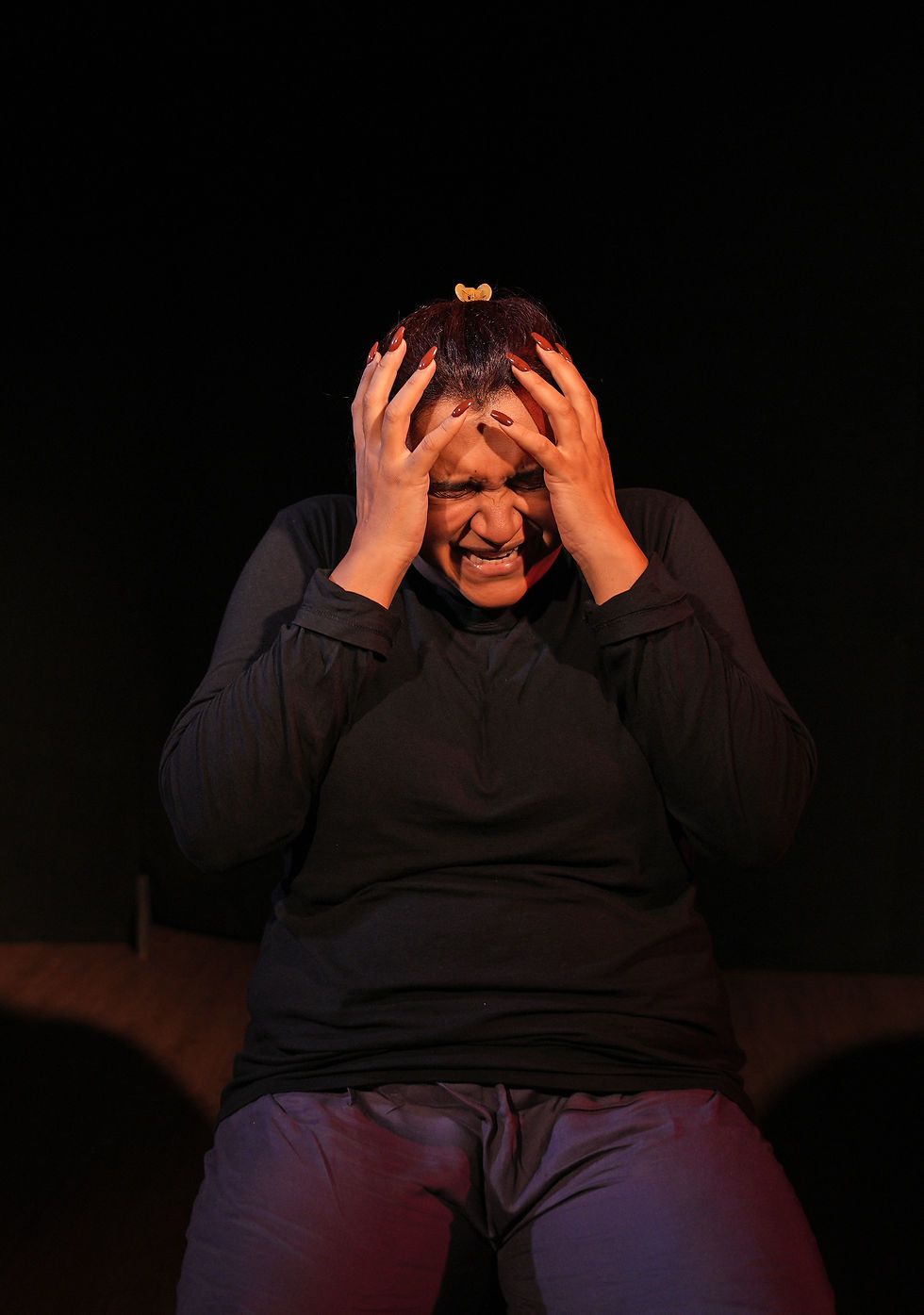


Comments