

Curiosity may have killed the cat but it makes an actor live!


Most actors know that to be curious makes them better at their craft but many do not practice it in their every day lives, and indeed many do not practice it as one of the fundamental elements of their journey into character and the play.
The Role of Curiosity in the Actor’s Craft
Curiosity sits at the very heart of acting. It’s what keeps the work alive — the impulse to ask: Why does this person behave this way? What makes them tick?
From the earliest training methods of Konstantin Stanislavski to the rehearsal rooms of today, curiosity has always been the engine of truthful performance.

Konstantin Stanislavski — The Observer of Truth
Stanislavski believed an actor must become a careful observer of human life — not to imitate people, but to understand them. His “art of experiencing” asked actors to look inward and outward with equal interest: to notice small details, to question motivation, to feel what drives a moment from the inside out.
Without curiosity, acting becomes mechanical — a performance of gestures, not of humanity.
“Love the art in yourself, not yourself in the art.”— Konstantin Stanislavski

Sanford Meisner — The Listener
Sanford Meisner turned curiosity toward other people. His famous definition — “Acting is living truthfully under imaginary circumstances” — reminds us that curiosity isn’t only about self-discovery; it’s about staying alive to the world around you.
In Meisner’s exercises, curiosity means listening deeply. Every look, word, and breath from a partner offers new information. The curious actor doesn’t plan a performance — they discover it in real time.
“Acting is living truthfully under imaginary circumstances.”— Sanford Meisner

Jacques Lecoq — The Physical Explorer
Jacques Lecoq rooted curiosity in the body. He believed actors learn through movement and observation — through le jeu, the play of discovery.
He urged actors to explore like children: to study how a tree bends, how a material folds, how a crowd moves.
Physical curiosity awakens the senses and keeps performance connected to the living world. The body becomes a question, always reaching toward something it doesn’t yet know.
“To mime is to rediscover the world.”— Jacques Lecoq

Michael Chekhov — The Imaginer
Michael Chekhov saw curiosity as a bridge to the imagination. His “psychological gesture” encouraged actors to explore character through movement and image rather than analysis.
Curiosity, for Chekhov, means following impulses and seeing where imagination leads instead of trying to control it. When actors allow curiosity to move freely between thought, body, and emotion, they enter what Chekhov called the “radiant state” — open, intuitive, and creatively alive.
“The body is the actor’s bridge to the soul.”— Michael Chekhov

Robert Benedetti — The Questioner
Robert Benedetti described curiosity as the creative question that drives every moment of an actor’s work. He reminded us that the actor’s job is to make discoveries, not decisions.
Instead of locking into choices too early, the curious actor keeps asking:What’s really happening? Why now?
Curiosity keeps performance fresh, flexible, and alive to discovery.
“The actor’s job is to make discoveries, not decisions.”— Robert Benedetti
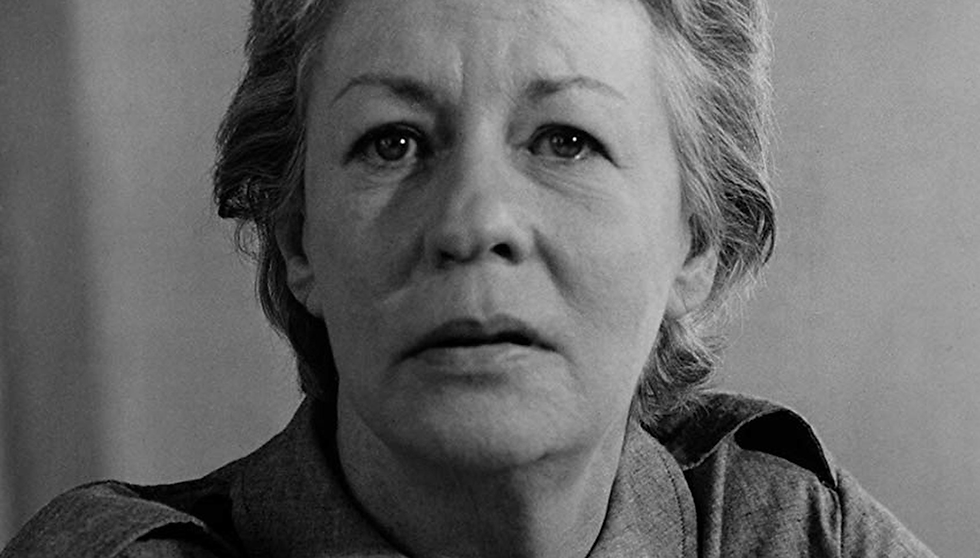
Uta Hagen — The Truth-Seeker
Uta Hagen brought curiosity down to earth — into the details of everyday truth. Every role began, for her, with a simple question:What would I do if I were in this situation?
She urged actors to examine the given circumstances with honesty, using their own experiences as bridges into character. Curiosity, for Hagen, was a form of respect — for truth, for reality, and for the craft itself.
“If you want a part of your own, you must create it — not copy it.”— Uta Hagen

Stella Adler — The Visionary
Stella Adler made curiosity a moral responsibility. Building on Stanislavski’s foundation, she urged actors to expand their awareness — to see beyond themselves and into the vastness of human experience.
She demanded that her students read, observe, and imagine deeply — to “see with the eyes of the heart.” For Adler, curiosity is generous and outward-looking.
Acting isn’t about showing emotion, but revealing truth — and truth requires a well-fed imagination.
“Your talent is in your choices, and your choices are shaped by the depth of your understanding.”— Stella Adler

Declan Donnellan — The Liberator
Declan Donnellan reframed curiosity as liberation. Many actors get trapped in self-consciousness — worrying about how they look or sound.
Donnellan reminds us that the actor’s attention must always move outward. Curiosity shifts that focus toward the target — another person, object, or idea. When the actor’s attention is on what they’re curious about, fear dissolves. Curiosity replaces anxiety with discovery.
“Fear grows in the dark of self-concern.”— Declan Donnellan

Glenn Hayden
As for me, I see curiosity as both a creative and ethical stance — a readiness to explore without conclusion and to meet the unknown with generosity rather than control.
In my rehearsal process, curiosity drives collaboration. I encourage actors to lean into the question, to follow impulses, and to treat mistakes as gateways to invention.
For me, curiosity is a kind of rehearsal for empathy — the act of imagining one’s way into another person’s experience, through character, the text and within the ensemble. A curious actor isn’t just gathering material for a role; they’re cultivating openness — the ability to stay surprised, responsive, and alive to possibility.
“Curiosity is a rehearsal for empathy.”— Glenn Hayden
Curiosity as a Way of Life
All these teachers — from Stanislavski to Donnellan, from Hagen to Lecoq — agree on one thing: curiosity can’t stop when rehearsal ends.
The best actors carry it into everyday life. They notice how people argue in a café, how someone hides sadness with a joke, how silence changes a room. These observations become fuel for performance.
When curiosity fades, so does vitality; acting becomes repetition instead of revelation.
To stay curious is to treat life as your ongoing rehearsal. Every interaction, every detail, is part of your research. Curiosity connects you to humanity — to empathy, to wonder, to the endless variety of people and situations that shape the world.
“You don’t imitate life — you investigate it. And in that investigation lies the soul of acting.” — Stella Adler
Practicing Curiosity: 10 Daily Habits for the Actor
Curiosity isn’t a luxury — it’s fuel. It keeps the artist awake, elastic, and alive. It’s how we stay ready when inspiration knocks. Here’s how to make curiosity part of your everyday actor’s practice —not as homework, but as play.
1. People-Watching with Purpose
Turn your commute, your coffee break, or your walk into rehearsal. Watch people — their gait, rhythm, and gestures. See how a person’s story leaks out through how they move. Don’t label, don’t guess — just witness.
“Observation is where acting begins.” — Uta Hagen
Try this: Each day, note one detail that catches your eye — a twitch, a laugh, a walk — and let it live in your body for a moment.
2. Listen Like You’ve Never Heard Before
Meisner said acting is “living truthfully under imaginary circumstances.”So start by living truthfully in real ones. When someone talks to you — really listen. Don’t plan your reply. Let their words move you.
Game: Once a day, let a conversation surprise you. Respond to what you hear, not what you expected.
3. Move Like a Story
Your body is your first instrument. Channel your inner Lecoq: explore how emotion moves. How does joy walk? How does boredom breathe? Change your pace, your posture, your gravity.
Try this: Pick an emotion or element (fire, water, air, earth) and improvise movement for five minutes. Don’t perform it — discover it.
4. Follow the Spark
When something catches your attention — a smell, a line of dialogue, a stranger’s hat — don’t dismiss it. That spark is your imagination saying, “Hey, over here!”
Mini exercise: Follow one curiosity a day. Google it, draw it, speak it aloud, or turn it into a one-line improv. Keep it playful.
“Your talent is in your choices.” — Stella Adler
5. The Question Journal
Actors live in the unknown — so practice loving it. Each night, write one question you don’t know the answer to (IE):
“Why do people apologize when they’re not sorry?”
“What does courage sound like?”
No answers. Just curiosity in ink.
Bonus: Revisit old questions after a month — see what life has taught you in between.
6. Turn the Spotlight Outward
When nerves creep in, curiosity is your best armor. Donnellan reminds us: “The enemy of creativity is self-consciousness.” So flip the focus. Instead of “How am I doing?”, ask “What’s happening in front of me?”
Try this: In rehearsal or real life, find something fascinating in the person or object before you. Let attention replace anxiety.
7. Lean Into the Question (Glenn Hayden)
In the room, don’t rush to solve — Explore. Make mistakes. Make offers. Embrace confusion. Evoke fertile ground. Stay open, generous, playful. As I say, “Curiosity is the rehearsal of empathy.”
Challenge: Each day, do one thing differently — take a new route, ask a new question, or say yes to something you’d usually avoid.
8. Feed the Beast (Adler & Hagen’s Rule)
Actors who only study acting shrink their range. Curiosity means reading, watching, and listening beyond theatre — politics, cooking, history, dance, science. Everything you learn feeds your art.
Habit: Once a week, explore a world you know nothing about. Adler called it “the actor’s responsibility to expand the imagination.”
9. Rediscover the Everyday
Don’t let the world go numb around you. Taste your morning tea as if for the first time. Watch how sunlight moves through a window. That attention — that aliveness — is what audiences pay to see.
Practice: Name one thing each day that made you curious, surprised you, or made you feel something.
10. Stay Inside the Question
The most powerful actors never stop asking, “What else could this mean?” Curiosity keeps you fluid, brave, and alive. Every day, in and out of rehearsal, stay in the question — not to find the answer, but to find yourself.
Remember: Curiosity isn’t about knowing more. It’s about feeling more, seeing more, being more. That’s the actor’s daily work — and daily joy.
Bibliography
Adler, Stella. The Art of Acting. Edited by Howard Kissel. New York: Applause, 2000.
Benedetti, Robert. The Actor at Work. 10th ed. New York: Pearson, 2012.
Chekhov, Michael. To the Actor: On the Technique of Acting. New York: Harper Perennial, 1953.
Donnellan, Declan. The Actor and the Target. London: Nick Hern Books, 2002.
Hagen, Uta. Respect for Acting. New York: Wiley Publishing, 1973.
Lecoq, Jacques. The Moving Body: Teaching Creative Theatre. Translated by David Bradby. London: Methuen, 2000.
Meisner, Sanford, and Dennis Longwell. Sanford Meisner on Acting. New York: Vintage Books, 1987.
Stanislavski, Konstantin. An Actor Prepares. Translated by Elizabeth Reynolds Hapgood. New York: Theatre Arts Books, 1936.

Comments